
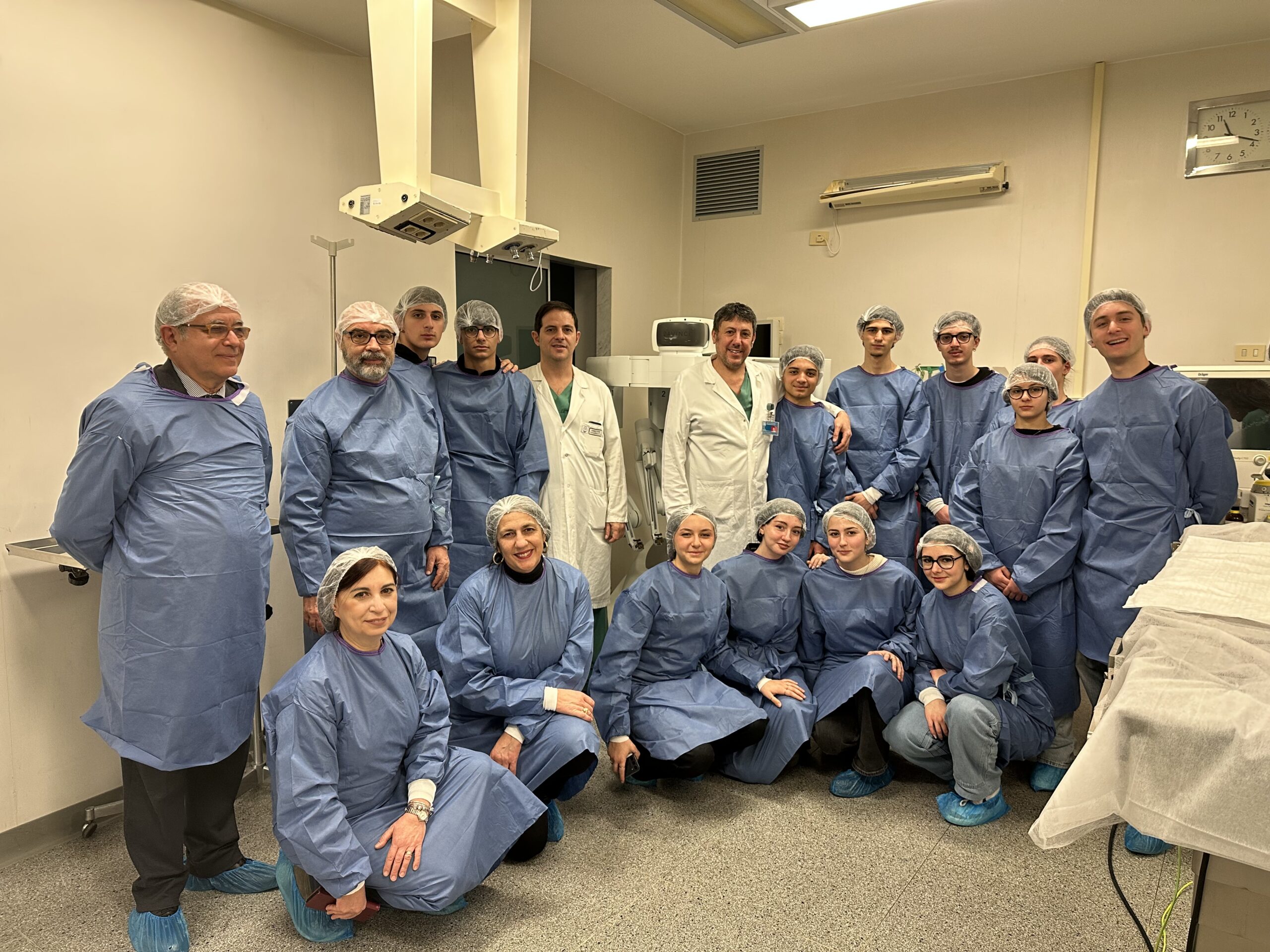
On 12 February 2026, the entire Robonova team took part in a meeting at the Ospedale San Carlo. In addition to our English teacher, Professor Grenci, those present included Dr. Patrizia Aloè, who is responsible for the project concerning the purchase of medical equipment, the biomedical engineer Mastrodonato, and Dr. Falasca, Director of the Complex Unit of Procurement and Economics.
The meeting began with a brief presentation by our Project Manager, who introduced our project to the participants. Afterwards, Dr. Aloè presented a PowerPoint on the legal framework of the robotic surgical system. The acquisition concerned a technology costing more than two million euros and required additional funding. The entire procedure was carried out in compliance with current regulations and European Union rules, ensuring full transparency. The tender was made public and published in the Official Journal of the European Union. All improvements exceeding the minimum requirements were evaluated and given specific scores, with particular attention to technical aspects.
The checks were conducted by the Regional Central Purchasing Body (SUARM). The executive phase of the contract then began, and the project was monitored through the SIFESR platform. In its first year of activity, the machine was used for 316 procedures.
After the legal overview, the biomedical engineer gave another presentation focused on robotic surgery and explained its most relevant aspects. He described the evolution of surgery from traditional to laparoscopic and finally to robotic techniques, with particular reference to the da Vinci Xi system, which includes the patient cart, the vision cart, and the CO₂ insufflator, and requires specific training for its use.
The benefits for patients were highlighted, including faster recovery and improved post-operative outcomes. A comparison was also made with other systems, such as Ottava by Johnson & Johnson, which is not yet available on the market.
Finally, the economic aspects were analysed, including annual maintenance costs (approximately €250,000), certified training and simulation for surgeons, and the impact on Diagnosis-Related Groups (DRGs). It was emphasized that shorter operating times allow more procedures to be performed, resulting in a greater economic return for the hospital.
The meeting concluded with an interview with Dr. Aloè and Engineer Mastrodonato conducted by members of our team, a final group photo, and a speech by Mr. De Meo, who supports and promotes our team.


No responses yet